


Huawei News
Huawei to hold 2021 annual results conference today
According to the latest information, Huawei’s 2021 annual performance conference will be held at 4:30 pm on March 28. During the event, Guo Ping, Huawei’s rotating chairman, and Meng Wanzhou, Huawei’s vice chairman and CFO, will describe the whole matter. This is also Meng Wanzhou’s first public appearance after returning to China.
Huawei has disclosed some performance data for 2021 in its 2022 New Year’s speech. In 2021, Huawei is expected to achieve sales revenue of about 634 billion yuan, with revenue down 28.9% year-on-year; in the fourth quarter, revenue fell 19% to 178.2 billion yuan.
At that time, Guo Ping said in his New Year’s speech that during the period, Huawei’s operator business performed steadily, enterprise business grew healthily, and terminal business rapidly developed new industries. The overall operating conditions of the company are in line with expectations.
However, Guo Ping also said in his New Year’s speech that the external environment continues to be turbulent, and the ICT industry faces challenges such as technology politicization and globalization. Huawei must maintain strategic focus and rationally respond to external force majeure.
It is reported that at this year’s performance conference, Huawei will interpret the annual report data and introduce Huawei’s future layout and business strategy.
Huawei News
Huawei & Angola Partner for Smart Grid Transformation & Green Energy
Imagine a future where a national power grid acts more like an organic, self-healing computer network than a chaotic mess of aging copper and transformers. If you think that sounds like science fiction, think again. On May 29, 2026, during the prestigious 2nd International Conference on Energy and Water in Luanda, Huawei teamed up with Angola’s Ministry of Energy and Water (MINEA) to release a historic white paper that promises to reshape the region’s entire power architecture.
The publication, aptly titled White Paper on Digitalization and Green Energy Transition of Angola’s Electric Power Industry, sets down an aggressive roadmap. It is a bold statement that digital modernization and structural economic survival are now inextricably linked.
A Visionary Leap for Angola’s Energy Grid
Angola is blessed with a staggering abundance of clean energy resources, positioning it beautifully to spearhead regional green integration across Southern Africa. But having raw potential means very little if your infrastructure is leaking energy like a sieve.
Dropping Watts, Adding Bits: The New Philosophy
To bridge this gap, the white paper relies heavily on a brilliant guiding principle: “more bits, less watts”. The idea is wonderfully simple yet revolutionary—by injecting massive digital intelligence (“bits”) into the grid, you can systematically optimize distribution and minimize pure power waste (“watts”). It’s about working smarter, not just pumping out more raw currents.
Resolving the Pains of Traditional Operational Models
Let’s be honest: traditional utility operations are feeling the strain. Arlindo Carlos, Angola’s Secretary of State for Energy and Water, frankly addressed the audience at the launch, pointing out the major bottlenecks plaguing legacy systems: heavy line losses, fragmented network management, and an expensive reliance on imported fuel. The status quo is no longer sustainable. By turning toward deep digital transformation, Angola intends to build a future power grid that is profoundly greener, smarter, and incredibly reliable.
Inside the Transformation: Merging Tech and Currents
So, how exactly does a world leader in telecommunications help stabilize a country’s power network? It happens by fundamentally shifting from hard iron to intelligent software.
The Power of Four Core Technology Clusters
The backbone of this collaboration involves fusing four vital technology domains into a unified ecosystem:
- Digital Technologies (Bits): Cloud analytics, automated software controls, and IoT tracking.
- Power Electronics (Watts): Next-gen converters and optimized hardware pathways.
- Thermal Management (Heat): Advanced cooling methodologies to minimize energy bleed.
- Energy Storage Management (Battery): Sophisticated, smart storage solutions to save power for when it’s needed most.
Evolving the Power Matrix: What Lies Ahead?
This initiative is not just a collection of theoretical ideas printed on glossy paper; it provides an explicit operational template for the upcoming years.
Intelligent Distribution and Advanced All-Optical Networks
Moving forward, the extensive, old-school infrastructure of the past will make way for automated, grid-forming energy storage systems and intelligent distribution grids. Backed by robust, high-speed all-optical communication networks, the grid can seamlessly detect faults, dynamically adjust power routing, and absorb fluctuating renewable energies from solar and hydro plants without breaking a sweat.
Conclusion: Lighting a Greener Path for Southern Africa
Ultimately, the joint white paper proves that the future of power isn’t merely about burning cleaner fuels—it is about managing existing resources with hyper-intelligence. Through the “more bits, less watts” doctrine, Huawei and MINEA are providing a shining template for the entire African continent. The digital power revolution has officially arrived, and it’s starting from the ground up!
Huawei News
Huawei Mate 90 Series Sales Date: Flagship Timeline Revealed Early
| Huawei Mate 90 Series Sales Date: Flagship Timeline Revealed Early |
|---|
| Are you tired of waiting until the freezing winds of late November just to get your hands on the latest tech flagships? If you are a Huawei fan, I have some fantastic news for you. The upcoming Huawei Mate 90 series sales date has officially stepped into the spotlight, and it looks like we are getting a massive scheduling shake-up.
While tech enthusiasts usually brace themselves for a late Q4 release, a flurry of fresh supply chain insights and insider leaks indicate that Huawei is fast-tracking its next mega-hit. Let’s dive deep into why this timeline shift is happening and exactly when you can expect to see these premium devices hitting the shelves. A Shift in the Release RhythmFor the past few release cycles, Huawei has had to play a highly calculated game of chess with its manufacturing and component sourcing. However, prominent Weibo tipster @FixedFocus recently revealed that the tech giant is finally returning to its classic, predictable “release rhythm.” The Role of the Tau (τ) Scaling LawSo, what changed? Why is Huawei suddenly moving like clockwork again? The secret ingredient lies in a breakthrough known as the Tau (τ) Scaling Law. Relaxing the Supply Chain PressureBy successfully adopting this advanced Scaling Law, Huawei has managed to dramatically optimize its in-house semiconductor manufacturing. It acts like a pressure valve release for their production lines. Instead of scrambling to secure stable yields at the last minute, the company is breathing easy with a highly efficient, steady flow of homegrown mobile chipsets. This chip stability directly translates to earlier mass production and a much smoother road to retail stores. When Can You Buy the Huawei Mate 90?Let’s talk about the absolute sweet spot: the actual sales availability. Historically, you’d have to wait out the entire autumn season before catching sight of a new Mate phone in the wild. Shifting From November to SeptemberAccording to the latest industry murmurs, the Huawei Mate 90 series sales date may experience a significant bump forward. Instead of a late November drop, insiders suggest that the flagship handsets could hit the sales shelves as early as late September or early October. Imagine matching your mid-autumn holiday shopping with a brand-new, ultra-premium smartphone! This early rollout positions Huawei perfectly to go head-to-head with other late-summer flagship announcements, capturing market momentum right when consumer excitement is at an all-time high. What We Know About the Tech Under the HoodAn early launch is great, but what are we actually buying? Huawei isn’t just rushing these phones out to meet a deadline; they are bringing some seriously heavy artillery to the silicon wars. The LogicFolding Kirin ArchitectureHuawei recently dropped major clues during technical keynotes, confirming that the new Kirin chips debuting in Fall will be the very first to adopt a cutting-edge LogicFolding chip architecture. Think of it as folding a piece of paper to fit more information into a tighter space; this breakthrough structure dramatically packs in transistor density to rival the global 3nm standard, delivering a massive leap forward in both processing power and thermal efficiency. Expected Pricing and Camera UpgradesOn the photography side, rumors point toward the return of an incredible 10x true optical zoom on the Pro Max model, backed by a massive 1-inch primary sensor. Now, will all this powerhouse tech burn a hole in your pocket? Rumors suggest the Mate 90 series might face a mild price hike compared to its predecessor, but insider reports note it will remain highly competitive, remaining safely below the astronomical price tags of rival imported premium brands. Conclusion: Is the Wait Worth It?With the supply chain pressures finally sorted out by the Tau Scaling Law and the innovative LogicFolding Kirin chips ready to roar, the Huawei Mate 90 series is shaping up to be an absolute powerhouse. Keep your eyes peeled for late September—your next smartphone upgrade might be arriving much sooner than you think! |
Huawei News
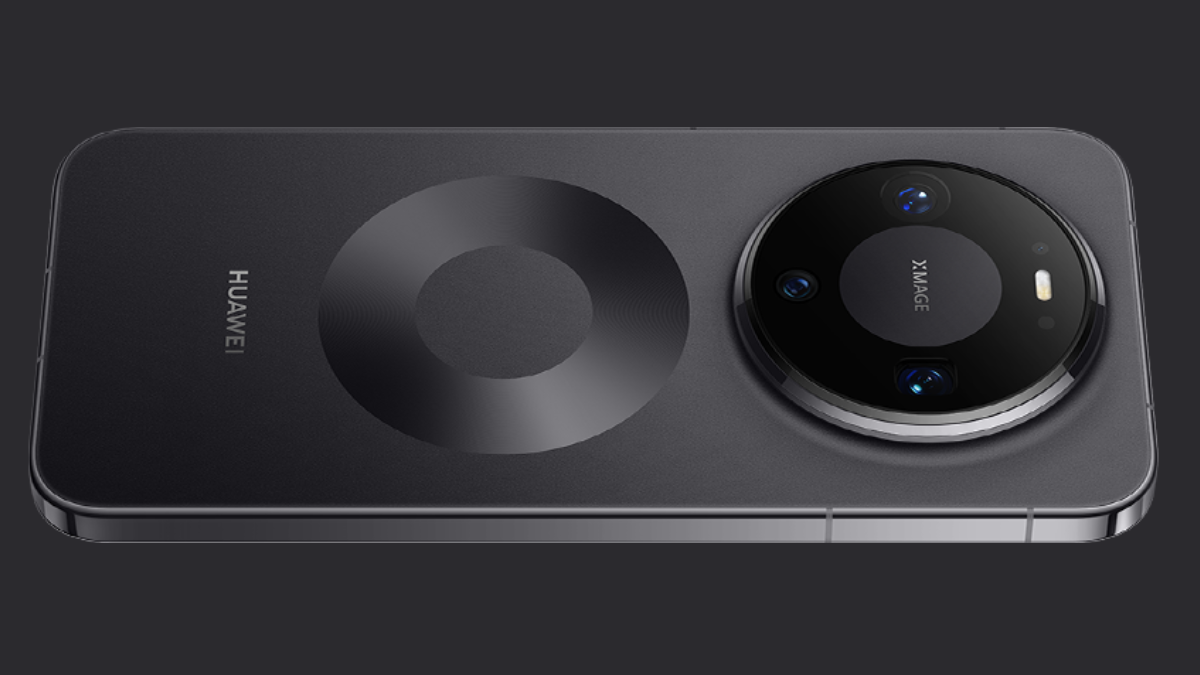
Huawei Nova 16 Ultra launched with 200MP camera and 7000mAh battery
Huawei has officially launched its highly anticipated Nova 16 smartphone series in China. The absolute king of the new lineup is the high-end Huawei Nova 16 Ultra. This premium device comes packed with incredible hardware features that place it far above what average mid-range mobile phones offer on the market today.
The most shocking highlight of the Nova 16 Ultra is its massive 7,000mAh battery cell. This is the largest battery capacity that the brand has ever introduced inside the popular Nova phone family. To make sure you do not spend all day waiting by a wall plug, the phone supports ultra-fast 100W wired SuperCharge technology and 50W wireless charging speeds. It even supports 7.5W reverse wireless charging to fill up your earbuds on the go.
On the front, the phone carries a beautiful 6.84-inch LTPO OLED display screen that handles an adaptive refresh rate from 1Hz to 120Hz. This smart display can save a lot of battery life while playing games or reading simple text documents. Furthermore, the screen can reach a jaw-dropping peak brightness of 6,000 nits, allowing you to view images clearly in direct summer sunlight. To protect against accidental drops, the front glass uses the company’s strong Kunlun Glass shield.

Huawei Nova 16 Ultra
Flagship processing power and a 200MP triple camera lens system
Under the hood, the Nova 16 Ultra runs entirely on the company’s in-house Kirin 9010S mobile processor. This is a flagship-grade processor that was previously used inside the premium Pura 90 smartphone models. To match this processing power, the phone runs on the brand-new HarmonyOS 6.1 software system straight out of the box, offering incredibly fast animations and clean user menus. The entire phone body also features premium IP68 and IP69 ratings to fully resist heavy dust and water splashes.
Photography fans are getting a massive upgrade as well. The back of the device features a huge horizontal camera layout that holds a flagship 200-megapixel primary camera lens. This main sensor utilizes an f/1.8 aperture and physical Optical Image Stabilization (OIS) to take crisp, blur-free images in dark environments. The triple setup also includes a 50-megapixel periscope telephoto lens with 3.7x optical zoom and a 50-megapixel ultra-wide macro camera. Selfie lovers can use a high-quality 50-megapixel front-facing camera tucked inside a small pill-shaped cutout.