

Connect with us

Huawei 5G

US companies can talk about 5G standards again with Huawei: Source

picture-1

Published

on

5g huawei

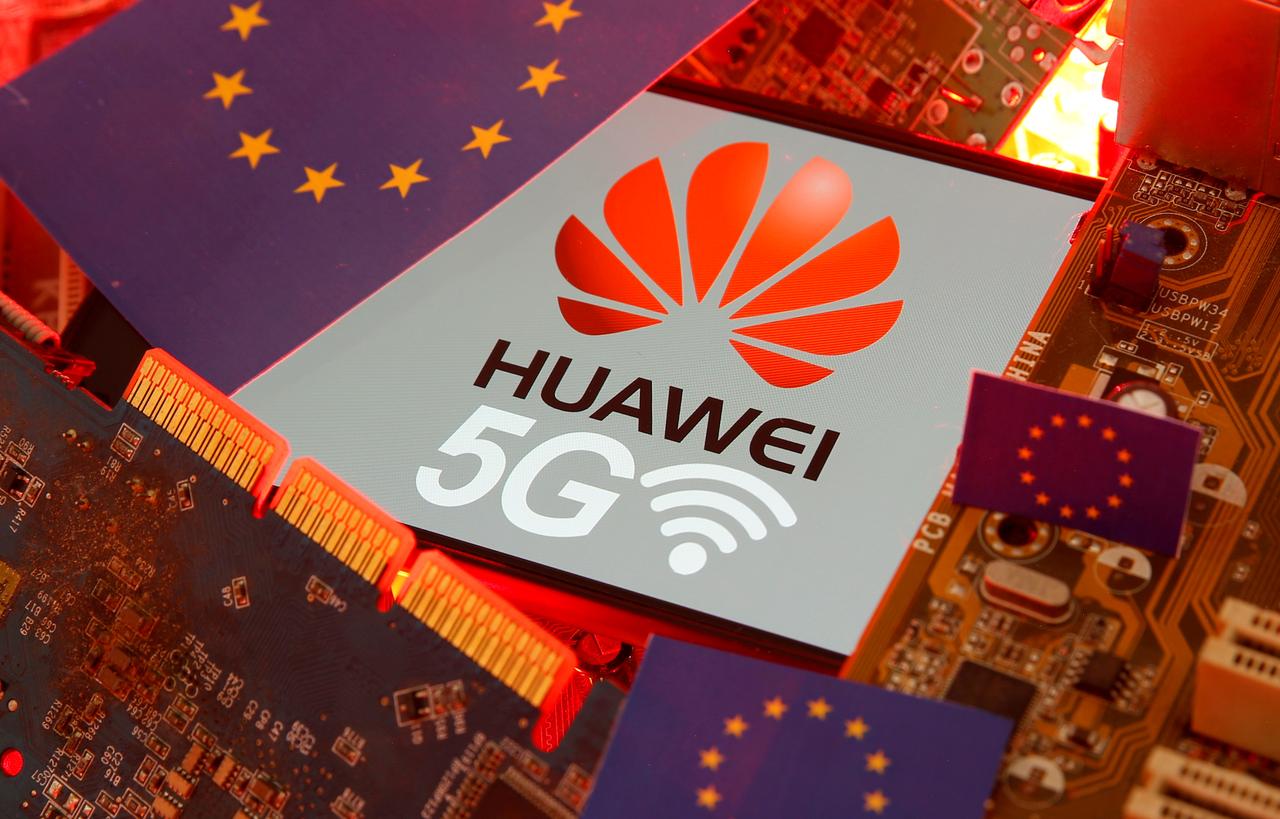
According to the Reuters report, the U.S. Department of Commerce is about to sign a new collaboration agreement between Huawei and U.S. companies for the next-generation 5G networks.

Huawei has been on the United States Entity List for 1 year now, which enables cooperation between Huawei and American companies only through an exceptional permit.

Engineers in some U.S. technology companies stopped engaging with Huawei to develop standards after the Commerce Department blacklisted the company last year. The listing left companies uncertain about what technology and information their employees could share with Huawei, the world’s largest telecommunications equipment maker.

That has put the United States at a disadvantage, said industry and government officials. In standards-setting meetings, where protocols and technical specifications are developed that allow equipment from different companies to function together smoothly, Huawei gained a stronger voice as U.S. engineers sat back in silence. The Commerce Department placed Huawei on its “entity list” last May, citing national security concerns. The listing restricted sales of U.S. goods and technology to the company and raised questions about how U.S. firms could participate in organizations that establish industry standards.

After nearly a year of uncertainty, the department has drafted a new rule to address the issue, two sources told Reuters. The rule, which could still change, essentially allows U.S. companies to participate in standards bodies where Huawei is also a member, the sources said. The draft is under final review at the Commerce Department and, if cleared, would go to other agencies for approval, the people said. It is unclear how long the full process will take or if another agency will object.

Advertisement

“As we approach the year mark, it is very much past time that this is addressed and clarified,” said Naomi Wilson, senior director of policy for Asia at the Information Technology Industry Council (ITI), which represents companies including Amazon.co Inc, Qualcomm Inc and Intel Corp.

The U.S. government wants U.S. companies to remain competitive with Huawei, Wilson said. “But their policies have inadvertently caused U.S. companies to lose their seat at the table to Huawei and others on the entity list.” The rule is only expected to address Huawei, the people familiar with the matter said, not other listed entities like Chinese video surveillance firm Hikvision.

In adding Huawei to the list last May, the Commerce Department cited U.S. charges pending against the company for alleged violations of U.S. sanctions against Iran. It also noted that the indictment alleges Huawei engaged in “deceptive and obstructive acts” to evade U.S. law. Huawei has pleaded not guilty in the case.

A Department of Commerce spokesman declined to comment. A Huawei spokeswoman also declined to comment. “I know that Commerce is working on that rule,” a senior State Department official told Reuters on Wednesday. “We are supportive in trying to find a solution to that conundrum.”

The White House and departments of Defense, Energy, and Treasury did not immediately respond to requests for comment. “International standard setting is important to the development of 5G,” said another senior administration official, who also did not want to be identified. “The discussions are about balancing that consideration with America’s national security needs.”

Advertisement

Six U.S. senators, including China hawks Marco Rubio, James Inhofe and Tom Cotton, last month sent a letter to the U.S. secretaries of Commerce, State, Defense and Energy about the urgent need to issue regulations confirming that U.S. participation in 5G standards-setting is not restricted by the entity listing.

“We are deeply concerned about the risks to the U.S. global leadership position in 5G wireless technology as a result of this reduced participation,” the letter said. In the telecommunications industry, 5G, or fifth-generation wireless networks, are expected to power everything from high-speed video transmissions to self-driving cars.

Telegram- HuaweiUpdate.com

Huawei 5G

5G and 6G Development Roadmaps: Huawei’s Vision for the Future

picture-1

Published

on

By

5G To 6G 2035

As we are already aware of technology changes and I hope you know that by 2030, a single 6G network could theoretically download an entire movie in less than a second? That’s not science fiction—it’s the reality Huawei is building toward with their revolutionary wireless development roadmap. As we stand at the crossroads of 5G maturity and 6G emergence, understanding these technological leaps isn’t just fascinating—it’s essential for anyone wanting to stay ahead in our increasingly connected world.

Where 5G Stands Today: The Foundation is Set

In terms of Chinese tech giant Huawei’s concern, the company’s 5G technology has already transformed how we connect, but we’re only scratching the surface of its potential. Current 5G networks deliver speeds up to 100 times faster than 4G, but here’s what most people don’t realize: we’re still in the early stages of 5G deployment.

The company’s 5G roadmap focuses on three critical phases. First, enhanced mobile broadband (eMBB) brings lightning-fast smartphone experiences. Second, ultra-reliable low-latency communication (URLLC) enables real-time applications like autonomous vehicles. Third, massive machine-type communications (mMTC) connects billions of IoT devices seamlessly.

Just imagine related to your daily routine—from streaming 4K videos without buffering to enabling smart home devices that respond instantly. That’s 5G working behind the scenes, and Huawei’s infrastructure powers much of this transformation globally.

The 6G Vision: Beyond What We Can Imagine

While 5G continues expanding, Huawei’s 6G development roadmap paints an even more ambitious picture. The company predicts commercial 6G networks will launch around 2030, delivering speeds reaching 1 terabit per second—that’s 100 times faster than current 5G.

Advertisement

But 6G isn’t just about speed. Huawei envisions “intelligent connectivity” that integrates artificial intelligence directly into network infrastructure. Imagine networks that predict your needs, automatically optimize performance, and create immersive experiences that blur the lines between physical and digital worlds.

The 6G roadmap includes three revolutionary capabilities: extreme connectivity for 100 billion devices, AI-native networks that learn and adapt, and integrated sensing that turns infrastructure into a massive sensor network. Your smartphone might become a health monitor, environmental detector, and augmented reality gateway all at once.

Key Milestones and Timeline Predictions

Huawei’s development roadmap reveals fascinating milestones ahead. By 2025, they expect 5G-Advanced (5.5G) to bridge the gap toward 6G, introducing enhanced AI capabilities and improved energy efficiency. This intermediate step will test technologies that eventually power 6G networks.

The period from 2025 to 2028 represents the critical 6G research and standardization phase. During this time, Huawei will collaborate with global partners to establish 6G standards, test prototype networks, and develop the semiconductor technologies needed for next-generation infrastructure.

Commercial 6G deployment begins around 2030, but the full vision won’t materialize until 2035. By then, Huawei anticipates ubiquitous connectivity where every surface, device, and even clothing could connect to intelligent networks seamlessly.

Advertisement

Real-World Impact: How These Networks Will Change Your Life

These technological advances aren’t just impressive numbers—they’ll fundamentally transform how you work, learn, and live. Remote surgery becomes routine when doctors can operate robots with zero latency. Virtual meetings feel as natural as in-person conversations through holographic telepresence. Smart cities optimize traffic, reduce energy consumption, and improve public safety through interconnected sensors.

Consider education: 6G networks could enable immersive learning experiences where students virtually explore ancient Rome or conduct chemistry experiments in safe, simulated environments. The possibilities extend far beyond entertainment into healthcare, manufacturing, and environmental protection.

The Road Ahead: Challenges and Opportunities

Huawei’s ambitious roadmap faces significant challenges, including regulatory hurdles, massive infrastructure investments, and the need for global cooperation on standards. However, the company’s track record in 5G deployment demonstrates their capability to overcome these obstacles.

The wireless future that Huawei envisions promises unprecedented connectivity, intelligence, and capability. As these networks evolve, staying informed about their development helps you prepare for the digital transformation ahead. Whether you’re a technology enthusiast, business leader, or simply curious about the future, understanding these roadmaps positions you to leverage the incredible possibilities coming our way.

Ready to explore how these network advances will impact your industry or daily life? Stay tuned to the latest developments in Huawei’s 5G and 6G journey—the future is closer than you think.

Advertisement

How Future AI Will Accelerate Network Growth

Artificial intelligence stands as the secret weapon in Huawei’s network evolution strategy, fundamentally changing how networks grow and adapt. Future AI won’t just manage networks—it’ll predict failures before they happen, automatically optimize traffic patterns, and even design network expansions based on usage predictions.

AI algorithms analyzing millions of data points every second to determine exactly where new cell towers should be placed, how much bandwidth each area needs, and when to upgrade infrastructure before users even notice slowdowns.

Huawei’s AI-driven approach promises self-healing networks that fix problems instantly, intelligent resource allocation that maximizes efficiency, and predictive maintenance that prevents outages. This means faster network rollouts, lower operational costs, and better service quality for everyone. The company estimates that AI integration could reduce network operational expenses by up to 30% while improving performance by 40%—a game-changer for global connectivity expansion.

Join Us On Telegram & Google News

Advertisement
Continue Reading

Android

Astronauts took the Huawei P50 Pro to space

picture-1

Published

on

By

Astronauts took the Huawei P50 Pro to space

Recently, Chinese astronauts have taken the flagship Huawei P50 Pro to space initiated to share some selfies of up there….!! Huawei P50 Pro smartphone in space is just rock, specifically for the International Space Station (via Huawei Central). The dual camera ring design of the phone is clearly visible in the images. As a Chinese astronaut shared some pictures from the Space Station. Which showcased the P50 Pro in his hand taking the phone there.

Also, the phone is pictured within a controlled atmosphere of the space station. Take it to outer space and it will likely destroy itself with its own heat due to lack of cooling. These images might suggest that the smartphone is capable of functioning even in space, but that is unlikely. Modern smartphones are designed to be used in Earth’s atmosphere. While certain functions like the camera and touch may work. There is no chance for signal reception and calling.

The Huawei P50 Pro runs on HarmonyOS and has a 6.6-inch OLED display with 1.07 billion colors, 120Hz refresh rate, and 2700 x 1228p resolution123. It is powered by a Qualcomm Snapdragon 888 4G processor with 8 CPU cores. Also, a maximum clock speed of 2840 MHz14. It has a 4360mAh battery that supports 66W wired and 50W wireless charging1.

Additionally, it has a quad camera setup on the back with a 50MP main sensor and a 13MP selfie camera on the front1. It is dust and water-resistant up to 1.5m for 30 minutes3. Also, it measures 158.8 x 72.8 x 8.5 mm and weighs 195g235. It comes in black and gold colors.

Astronauts took the Huawei P50 Pro to space

Astronauts took the Huawei P50 Pro to space

JOIN US ON TELEGRAM

Advertisement
Continue Reading

Huawei 5G

Huawei Recognized as a Customers Choice in 2023 Gartner Peer Insights

picture-1

Published

on

By

Huawei Recognized as a Customers Choice in 2023 Gartner Peer Insights

In the Gartner Peer Insights Voice of the Customer for Primary Storage for its OceanStor Dorado all-flash storage, Huawei was recognized as a 2023 Customers’ Choice. That too with a 100% user recommendation rate and a full score of 5.0 based on 214 reviews, Huawei steal the heart of customers.

Showcasing the Huawei OceanStor Dorado all-flash storage played a part in the evaluation process. Covering industries from a wide range of economic sectors, including telecommunications, manufacturing, services, and so on, the product was reviewed by hundreds of customers worldwide in various regions.

Over 150 countries and regions including Latin America, Europe, Africa, the Middle East, and Asia-Pacific, Huawei OceanStor Dorado all-flash storage is now utilized. Where it provides reliable services to industries such as finance, telecommunications, government, and public utilities.

Huang Tao, President of Huawei All-Flash Storage Domain, is convinced.

“We are grateful for the global community’s continued support and recognition, as Huawei’s primary storage is once again regarded as a ‘Customers’ Choice’. We believe this recognition is the highest form of affirmation from our valued clients, and it serves as a driving force fueling our persistent efforts towards further improvements.”

“In our commitment to innovation, we will focus on crucial aspects such as reliability, ease of use, and security, while continuously investing in technologies to offer our clients more efficient, stable, and intelligent storage solutions that accelerate their digital transformation.”

Advertisement

Huawei Recognized as a Customers Choice in 2023 Gartner Peer Insights

Continue Reading

Most Popular